
World-building though image-making, VR, and collective experience across physical and virtual worlds.
XR Women Museum: Vibrancy as Praxis
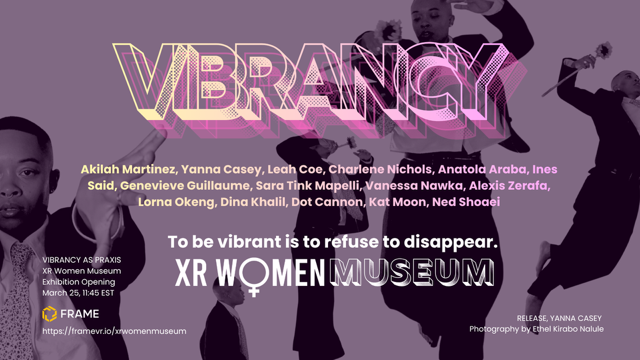
Vibrancy as Praxis, XR Women Museum, 2026
Vibrancy as Praxis
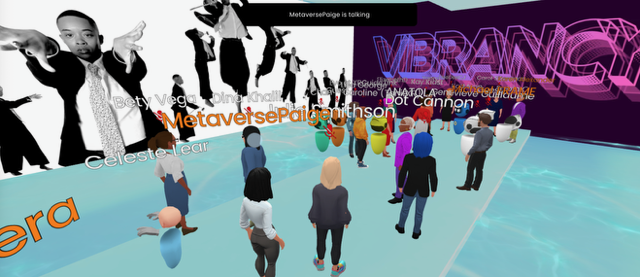
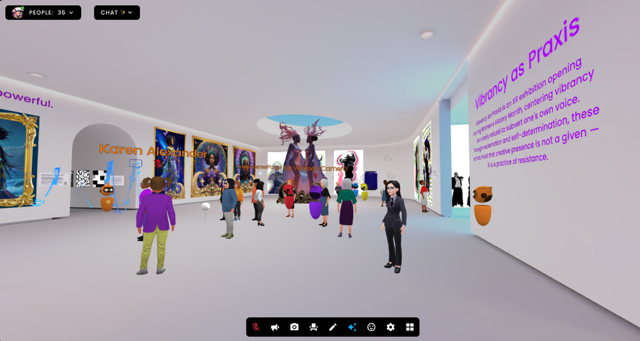
Vibrancy as Praxis is a virtual exhibition at XR Women Museum bringing together 15 artists across four continents working at the intersection of immersive technology, AI, and experimental media.
This exhibition approaches vibrancy not as an aesthetic, but as a practice—one rooted in presence, authorship, and the power to shape new realities. The works span XR, virtual worlds, sound, video, and hybrid forms, creating a living environment that unfolds through exploration and time.
Visitors move through portals, encounter artist-built worlds, and engage with works that are grounded in memory, body, data, and code. The exhibition is not static—it continues through each interaction.
Experience the Exhibition
The museum is open 24/7.
Visitors are invited to explore at their own pace and return as often as they like.
✨ Join us for special evening programming, including Occasional Occasions—intimate salons featuring artist readings, guided tours, and conversation inside the exhibition.
Exhibition Catalogue
A 51-page catalogue accompanies the exhibition, featuring all 15 artists alongside curatorial essays that expand on the ideas and lineages within Vibrancy as Praxis.
The catalogue is also available within the museum in the screening room.
An Ongoing Invitation
This exhibition is an open invitation—to experience, reflect, and return.
Vibrancy as Praxis continues through the artists, the space, and everyone who enters it.
Building the Worlds We Deserve
January, 2026
The future is not broken because we lack technology.
It is broken because we have been trained to imagine too little.
In moments of community fracture, national instability, and structural strain, optimism is often framed as naïve—or even irresponsible. We are told to be realistic, to brace for decline, to manage collapse. But realism without imagination is how futures become smaller, harsher, and more unequal.
Worldbuilding is a refusal of that contraction.
To build worlds—whether individually, like Moon Garden (Beta), or collaboratively, like Remix Reef—is not an escape from reality. It is a rehearsal for better ones. It is a way to practice care, cooperation, and justice before crisis demands them under pressure.
I build these worlds because I refuse the idea that the future must be inherited rather than shaped. Worldbuilding allows me to test what care looks like under constraint, how collaboration changes outcomes, and what happens when we design for dignity instead of dominance. Each speculative environment becomes a place to practice values before they are stressed by real-world limits.
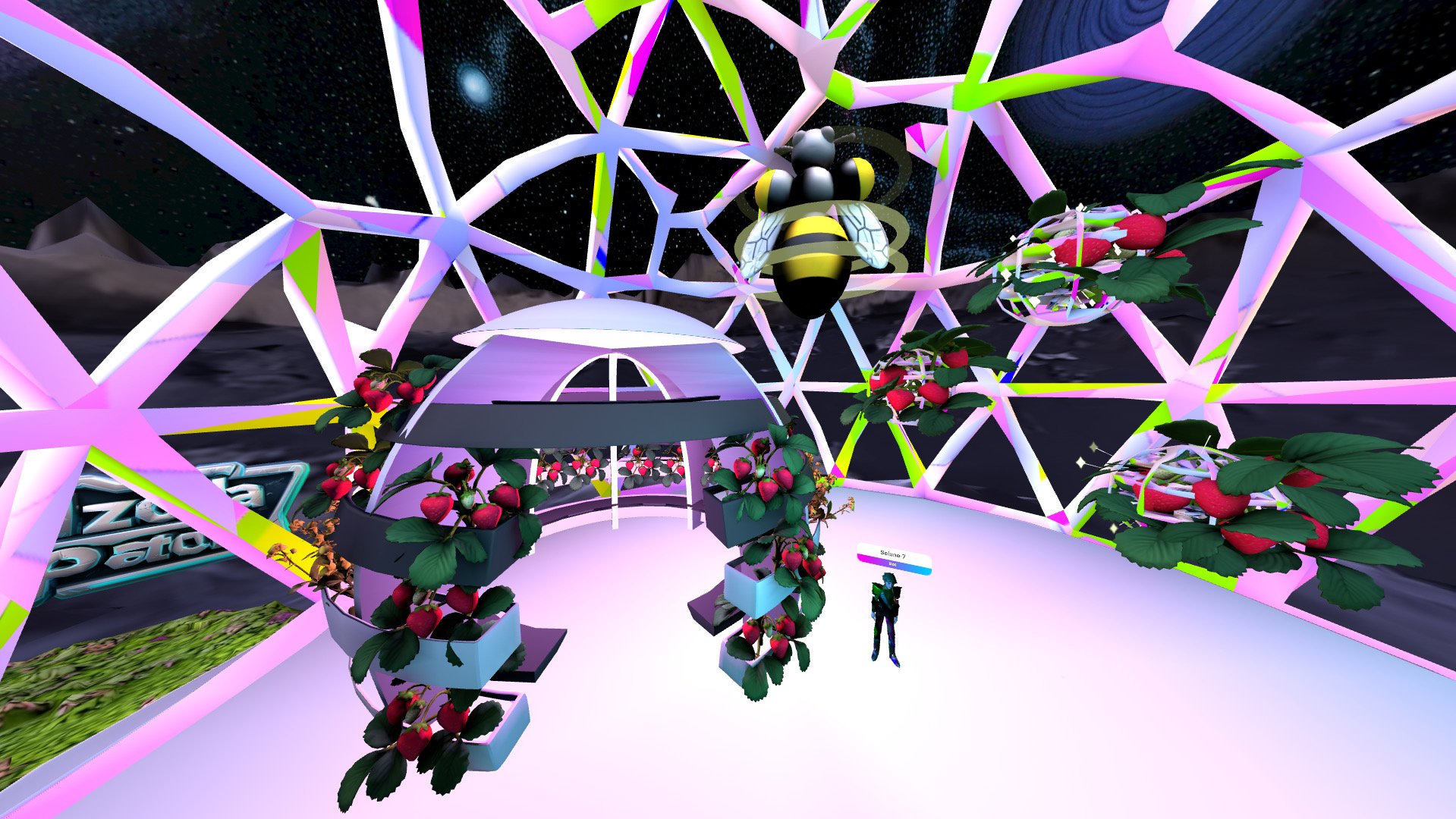
Strawberry Dome. Moon Garden (Beta), Meta Horizon Worlds.
Imagination Is Not a Luxury
When compounding trauma takes hold—political upheaval layered atop environmental precarity, economic stress, and social fragmentation—the imagination is often the first thing to collapse. Futures become defensive. Systems are designed for control rather than care.
This contraction is not accidental.
A limited imagination narrows the range of solutions we believe are possible. It reduces collective agency. It teaches us to accept systems we did not choose and futures we did not consent to.
Worldbuilding pushes back against this inertia.
By designing speculative environments that are optimistic and aspirational, we assert that the future is not predetermined. We prototype alternatives where regeneration matters more than extraction, where collaboration replaces domination, and where interdependence is treated as strength rather than weakness.
In this way, imagination becomes infrastructure—supporting emotional endurance, civic capacity, and long-term thinking.
Rebuilding After Violence: Imagining Forward
I’ve seen this most clearly in Minneapolis, where periods of violence and state response have been followed by grassroots rebuilding—community gardens, shared spaces, and mutual care—reminding us that repair begins long before institutions catch up.
After the murder of George Floyd, murals and community gardens emerged across the city. These were not symbolic gestures. They were infrastructures of healing, food sovereignty, and mutual aid—built in moments when trust in formal systems had fractured. Care arrived first through soil, seeds, and collective labor.
This is why the ability to create worlds—virtual, speculative, and collaborative—matters so deeply after violence. Worldbuilding creates space to ask the questions rebuilding requires: What do we keep? What do we refuse to repeat? What systems deserve to return, and which should be composted?
Why Virtual Worlds Matter Right Now
Projects like Moon Garden imagine closed-loop ecosystems on lunar pods—not as escapist fantasy, but as studies in stewardship under extreme constraint. Remix Reef invites many hands into a shared ecology, prioritizing emergence over ownership and care over control.
These worlds are not meant to replace reality. They are meant to reshape how we think within it.
When people inhabit speculative spaces—especially immersive ones—they internalize different logics:
Care over efficiency
Cycles over endless growth
Collaboration over competition
A single virtual solution may never translate directly into the physical world. But the patterns of thinking these worlds cultivate often do. Many real-world innovations—in climate adaptation, urban planning, cooperative governance, and restorative justice—begin as imagined systems long before they become policies or infrastructure.
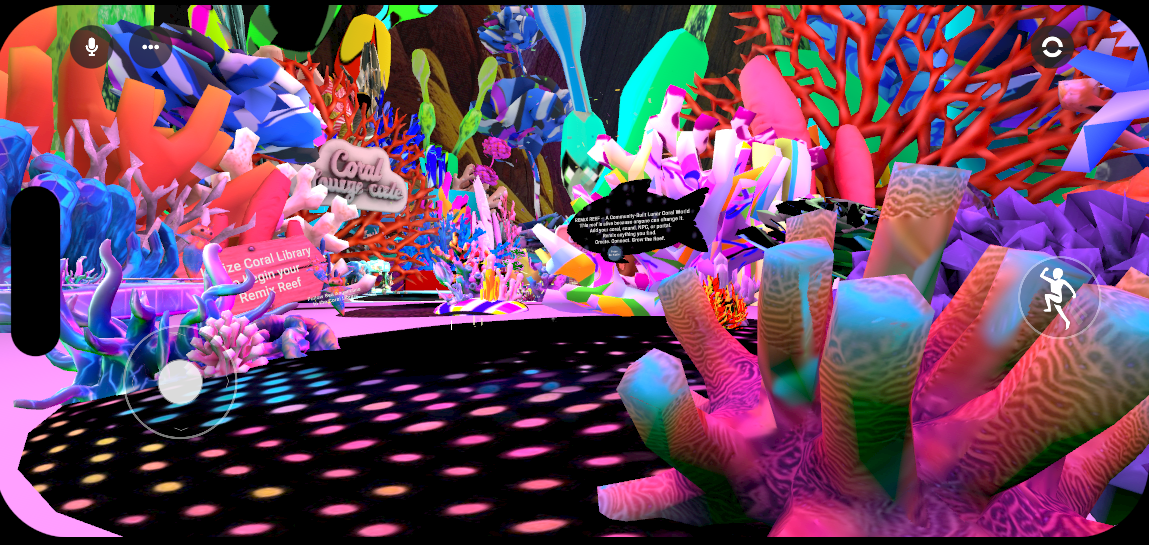
Remix Reef (2025). Winner of Community Hack, Reality Hackathon at MIT. Presented at UnitedXR, Brussels. Created by Sara Tink Mapelli, Charity Everett, Fia Mira, Leona Shimoru, Laura Curitor Hernandez, Directed by Paige Dansinger. Meta Horizon Worlds.
Moon Garden: Regenerative Design Beyond Earth
In Moon Garden, speculative ecology is grounded in real architectural lineage. The project draws directly from Michael Reynolds’ Earthship Biotecture—closed-loop systems developed outside Taos, New Mexico that use recycled tires packed with earth for thermal mass, water harvesting, and passive solar regulation.
In this lunar reinterpretation, reclaimed containment rings are packed with moon dust and moon rocks, transforming local regolith into stabilizing, insulating structures. These compressed lunar-earth walls anchor a southwest-facing greenhouse oriented toward reflected lunar light, where a garden grows attuned to low gravity, cyclical illumination, and thermal exchange.
Alongside this, Moon Garden incorporates Buckminster Fuller–inspired geodesic domes. One functions as a water lab, testing circulation, filtration, and reuse. Another serves as a strawberry pollination site—treating food cultivation and joy as design requirements, not luxuries.
Beyond the domes, azolla gardens grow in the depressions of lunar craters. These nitrogen-fixing aquatic plants—long used on Earth for regeneration—become living experiments in resilience, demonstrating how overlooked organisms can stabilize ecosystems in the most unlikely terrain.
This is not fantasy. It is rehearsal.
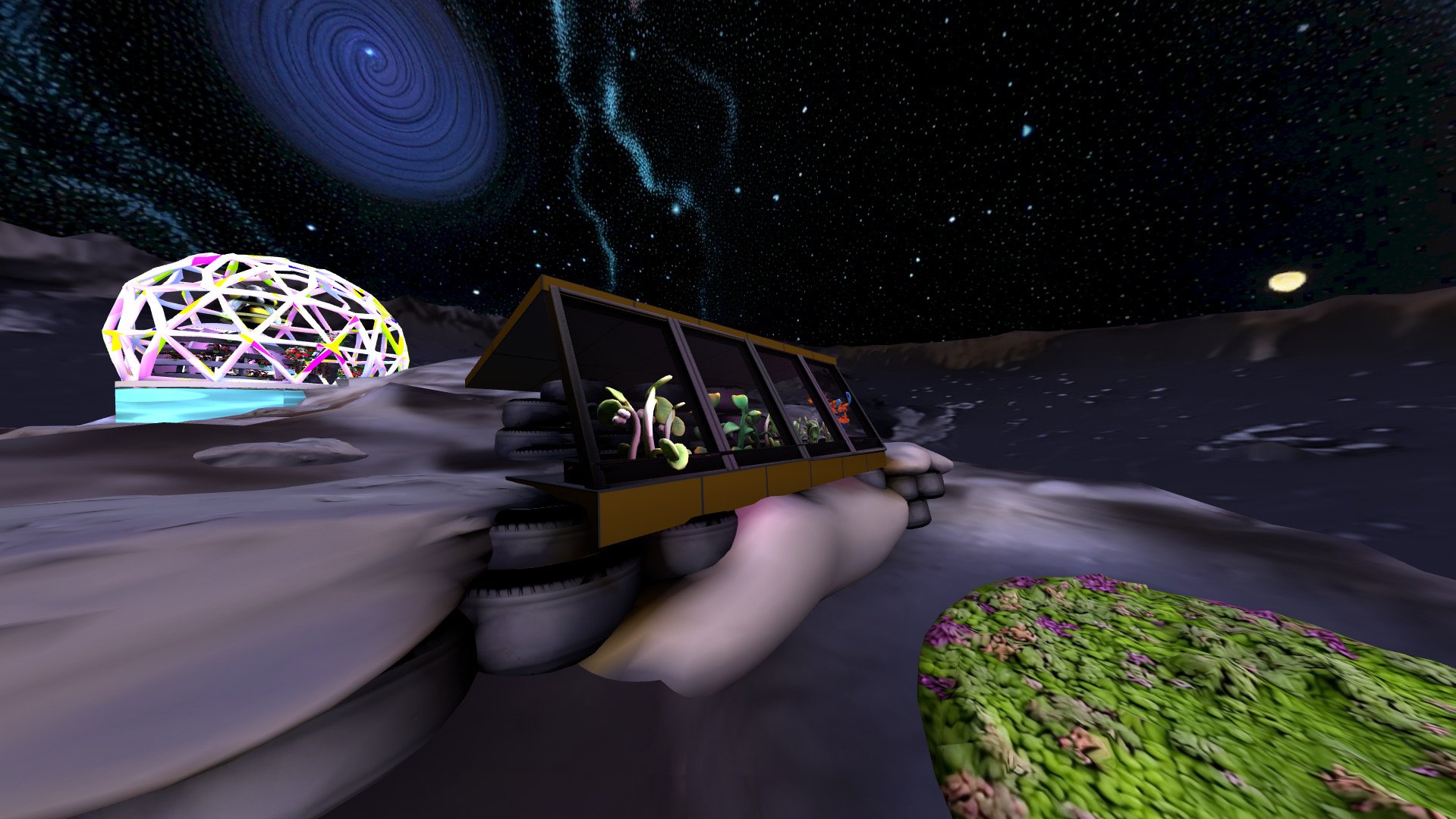
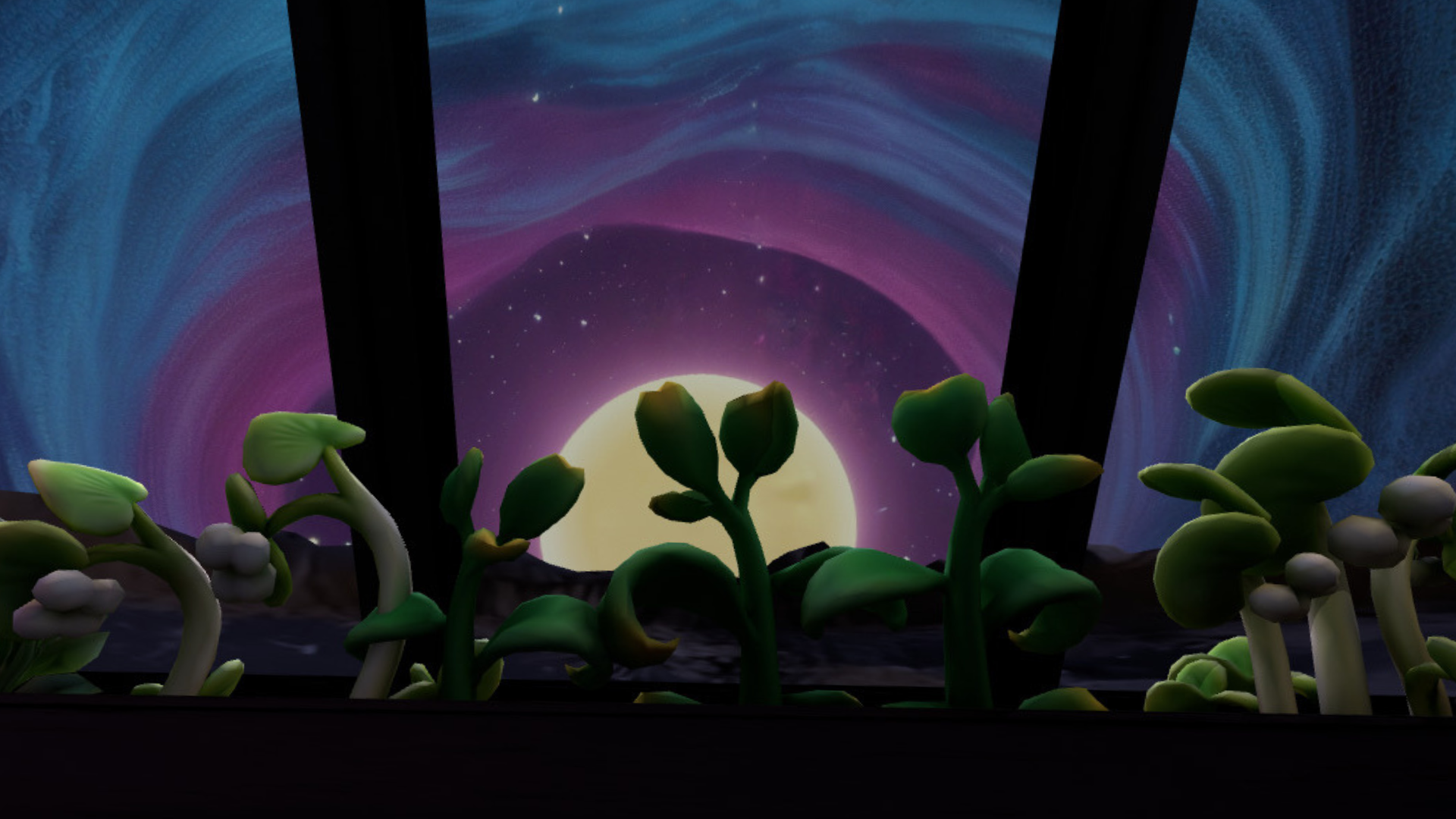
Moonship with Indoor Greenhouse. Inspired by Taos Earthship Biotecture by Michael Reynolds. Moon Garden, Meta Horizon Worlds.
AI and Immersive Technologies as Civic Tools
AI and immersive technologies expand who gets to participate in imagining the future.
They lower barriers to entry, allowing young people, artists, technologists, and communities historically excluded from planning power to experiment with worlds of their own making. These tools do not replace human values; they reflect and amplify them—at scale.
When we teach the next generation to build worlds, we are not training them to escape Earth. We are teaching them to think systemically, design ethically, collaborate across difference, and envision justice before enforcing it.
These are civic skills as much as creative ones.
Speculative Worlds Becoming Practice
These projects exist across virtual and physical space. Some are prototypes. Some are places you can already visit. All begin from the same premise: that optimistic futures are something we can actively design.
Moon Garden (Beta)
A speculative lunar ecology designed as a rehearsal for stewardship, closed-loop systems, and care under constraint.Remix Reef
A collaborative, cross-world ecology emphasizing shared ownership and collective imagination. Winner of the inaugural Community Hack at Reality Hack @ MIT, and featured at United XR in Brussels.Helsinki XR Sustainability Lab Prototype
A world prototype that became a real place. Conceived during Reality Hack @ MIT in 2024 at an event by the Virtual World Society, now actively realized by the Helsinki XR Center as a living lab for climate sustainability.Moon Lab
A proposed on-Earth creative lab supporting students interested in space, science, and speculative futures.Future City Linear Garden (New)
An evolving concept where gardens unfold across paths rather than plots, prioritizing movement, continuity, and journey.Manna Garden: One
One of my earliest worlds, tested at Better World Museum’s flagship space in Minneapolis—grounding speculative ecology in real soil, shared labor, and public experimentation.
Optimism Is a Radical Act
To insist on aspirational futures during times of collapse is not denial. It is resistance.
Optimistic worldbuilding refuses the narrative that decline is inevitable or that care is inefficient. It asserts that humane cities, just countries, and reciprocal global—and interplanetary—relationships are not only possible, but designable.
When I build worlds, I am not offering answers. I am offering invitations—to imagine together, to prototype together, and to remember that we are still allowed to want something better.
The act of building a world is the act of saying: we can do better, and we can practice now.
A Call to Build Together
If this resonates, I invite you to step inside the process.
Remix the Reef. Contribute to a shared speculative ecology. Or let me know in the comments if you’d like to join me for upcoming World Hop – Futurist Fridays—an open invitation to explore, build, and tend new worlds together.
I’m recommitting to this practice not as escapism, but as civic imagination in motion.
The worlds we deserve are not waiting to be discovered.
They are waiting to be built—by us, together.
Big Week for Coral Collective & Remix Reef!
December, 2025
1️⃣ Coral Collective at Miami Art Week with BitBasel
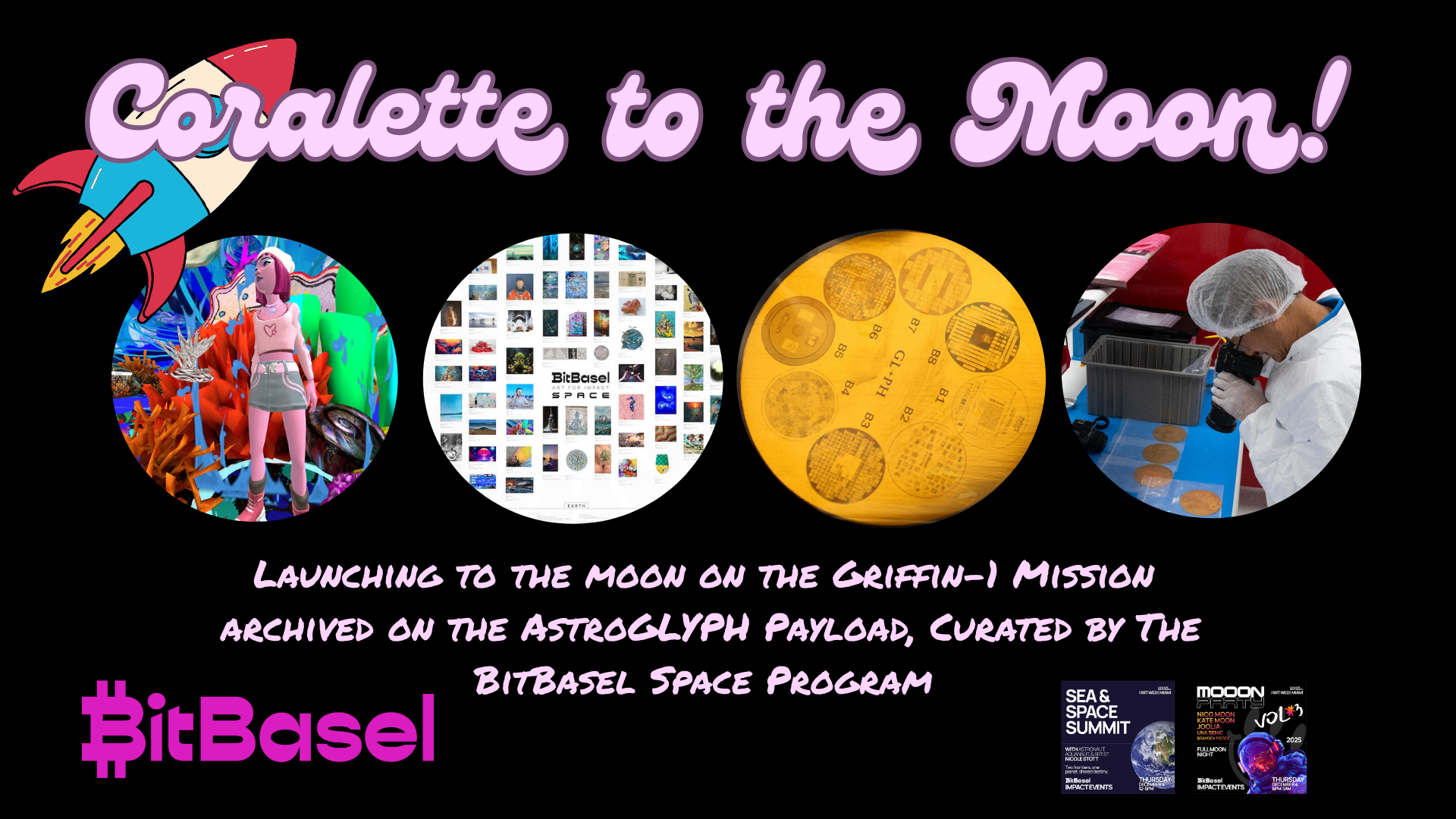
Coral Collective is being highlighted by BitBasel during Miami Art Week at the Sagamore Hotel in South Beach. As part of the BitBasel Space Collection, a photo of Coralette — our AI-enabled coral reef NPC — has been selected to launch to the Moon aboard the Griffin-1 mission and will be archived under the AstroGLYPH payload.
2️⃣ Remix Reef Wins the Reality Hack by MIT’s Community Hackathon
Our project Remix Reef won the Reality Hack by MIT’s Community Hackathon, hosted in partnership with Immersive Insiders and XRCC. We were also honored to receive XRCC’s Golden Ticket to attend United XR in Brussels, where Remix Reef will be featured at the MIT booth and at the MIT event during the conference.
Remix Reef invites worldbuilders to remix and expand a coral ecosystem using an open-source coral library — supporting Sustainable Development Goal 14: Life Below Water through creativity, participation, and visibility.Virtual Worlds
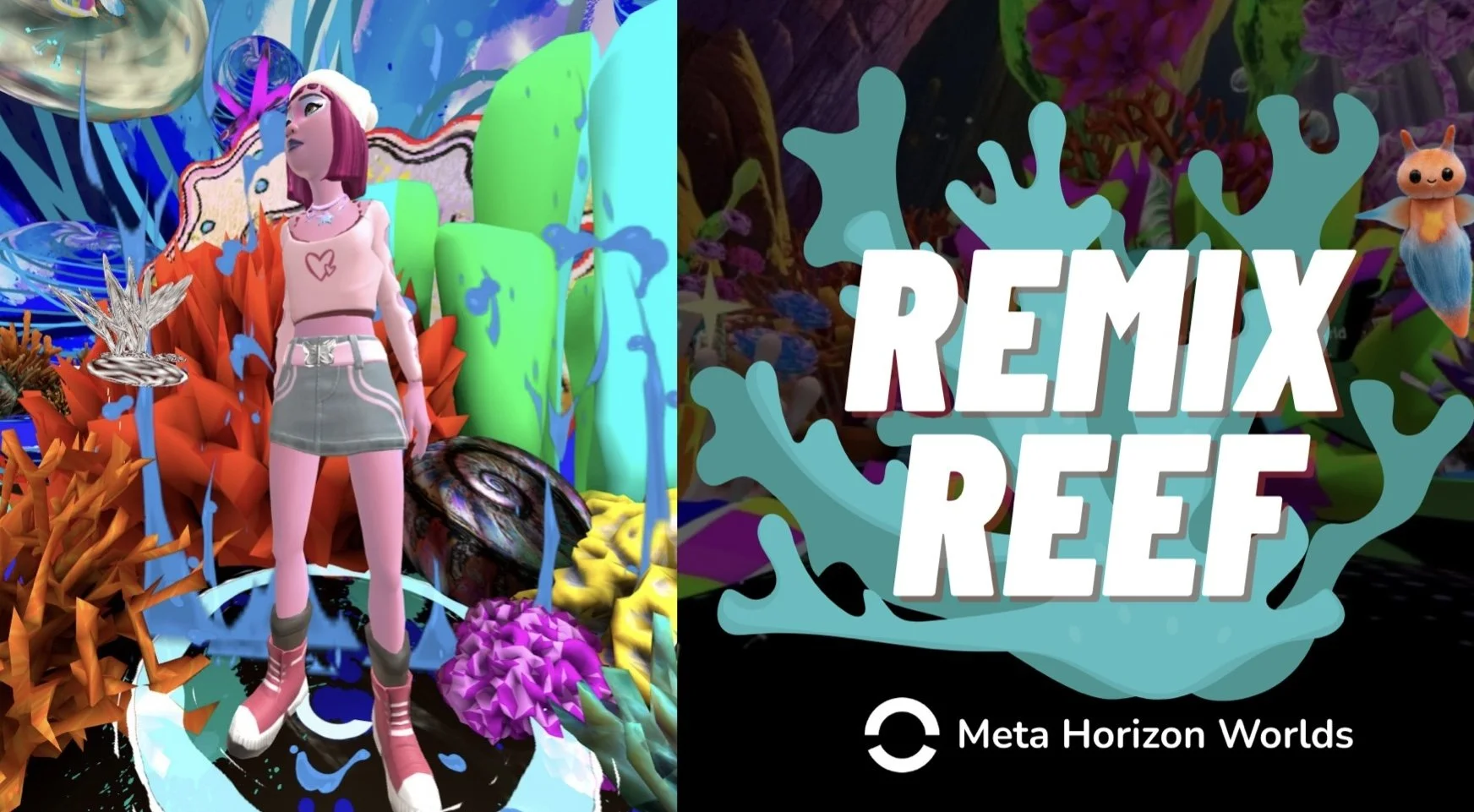
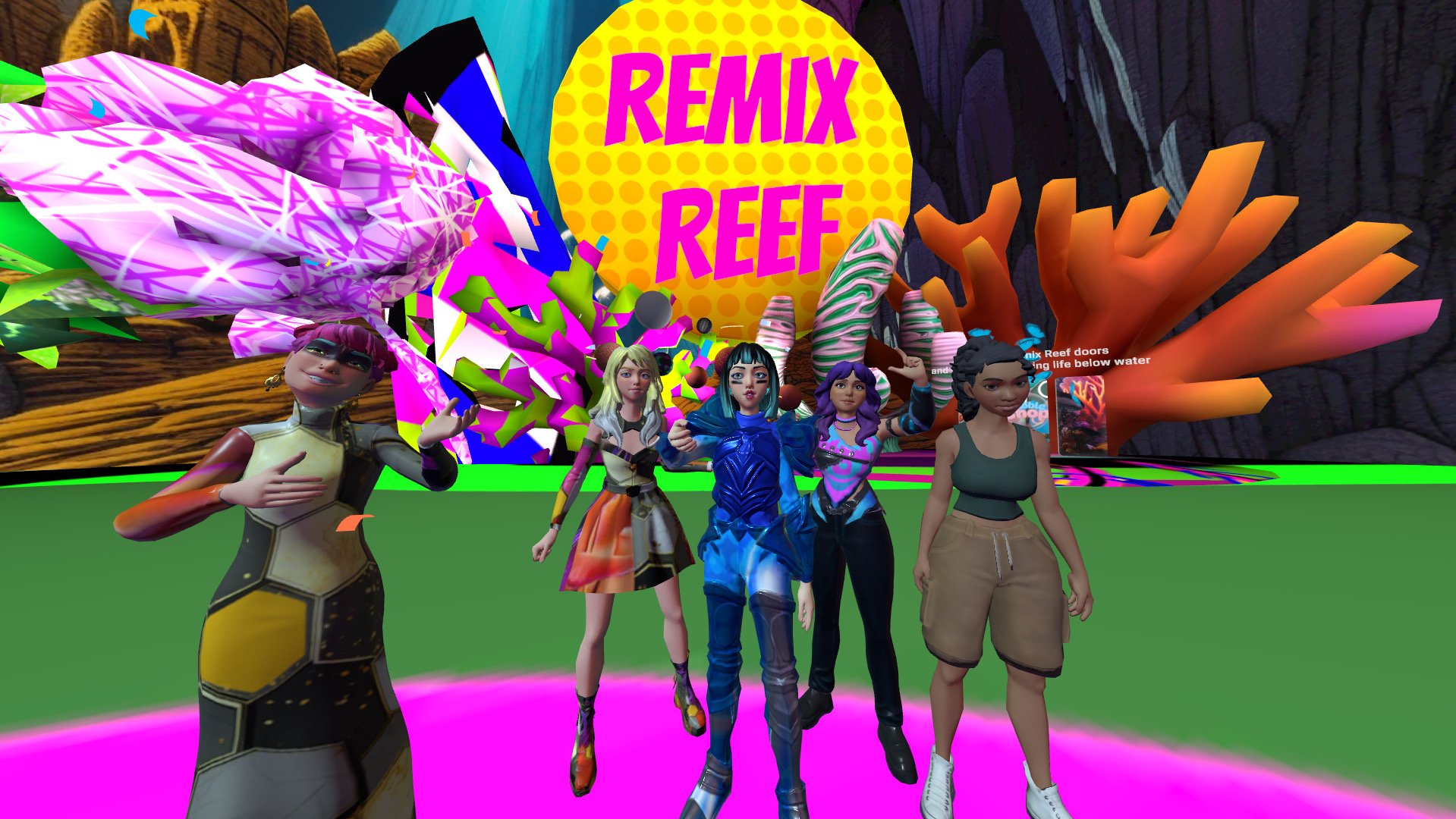
Remix Reef Team includes Charity Everett, Sara Tink Mapelli, Leona Shimoru, Fia Miri, and Laura Curtidor Hernandez
🌊 Why Coral Collective?
Coral Collective—along with Coral Quest, Deep Reef, and Sea Coral—was created to reimagine how we engage with the ocean. At a time when SDG 14: Life Below Water remains the least funded and often most overlooked of the UN Global Goals, these immersive, virtual reef experiences invite people into a vibrant, participatory relationship with the ocean’s most fragile ecosystems.
Created by Better World Museum, Coral Collective is not just digital art—it’s a regenerative call to action. As a museum dedicated to climate justice, community resilience, and creative technology, we saw a critical need to bring coral—and the ocean—back into people’s hearts, minds, and imaginations.
In a world of information overload and climate fatigue, we turned to play, storytelling, and AI to spark renewed connection. Through worldbuilding, AI coral NPCs, and interactive experiences like catching polyps or regenerating virtual reefs, people don’t just learn about marine life—they become part of its future.
These projects serve multiple goals:
✅ Raise awareness and empathy for endangered coral species and biodiversity loss
🎮 Teach new digital skills, like using GenAI to make 3D coral assets and worlds
🌐 Inspire global collaboration to regenerate reefs, virtually and physically
💡 Empower 1 million creators by 2030 to build for the sea
As the founder of Better World Museum, it’s clear to me: Museums must be active agents of hope and change. Coral Collective is our response—a place where art, tech, and community come together to restore what we still have time to save.
Select Image to Visit Virtual World: Coral Colelctive, Coral Quest (NEW Mobile Game), Deep Reef, and Sea Coral Virtual Worlds. Assessible on Mobile, PC, or VR


🌊 Coral Quest – A Mobile VR Game to Restore the Reef 🪸 Created for the Meta Worlds Mobile Game Competition
Welcome to Colorful Coral Quest, a joyful and immersive mobile VR game where players help restore coral reefs—one polyp at a time. Created inside Meta Horizon Worlds, this game invites players to swim, collect coral polyps, and grow vibrant reefs that spark new ocean life.
✨ Gameplay Highlights Tap a glowing coral to begin Catch floating coral polyps to restore bleached coral Watch as fish, jellyfish, and sea creatures return with every 5 corals Complete all 3 reef rounds to win—and inspire real-world change
💡 Our Mission Inspired by UN SDG 14: Life Below Water, Colorful Coral Quest raises awareness about ocean health and the power of collective action through play.
🧠 Created By: 🎨 Sara Tink Mapelli – Artist & Designer 📱 Seth Gibson – Mobile Developer 🎧 Paige Dansinger – Creative Director & Audio
🌐 Join the movement! Help us grow a global Coral Collective by contributing a 3D coral asset or building your own reef world in Horizon Worlds. Together, we’re building a virtual reef for the planet—with room for up to 1 million participants.
Coral Collective is a participatory digital reef world where AI-generated coral personas act as emotional bridges to inspire climate action—especially around SDG 14: Life Below Water. In this 3-part series, we introduce our AI Coral Influencers, each representing a different coral species impacted by ocean warming, pollution, and reef collapse.
💬 In Part 1, meet: — Coralette, the host and AI guide of Coral Collective — Bryn (Brain Coral), wise and watchful — Khorn (Staghorn Coral), fast-growing but vulnerable — Elle (Elkhorn Coral), a structural protector of the reef
These characters are not just NPCs—they are designed to be emotionally intelligent, data-informed, and creatively engaging to help players see themselves as part of the ocean’s story. By combining science, art, and GenAI, Coral Collective reimagines how AI NPCs can deepen empathy and agency in immersive spaces.
🎙️ Featured at AWE 2025 Panel "AI NPCs in Embodied Forums: Humans & NPCs in Social, Education, and Business 3D Worlds" Our panel explores how NPCs like the Coral Collective Influencers can complement—not replace—human interaction while offering onboarding, environmental storytelling, and safe, purpose-driven engagement in virtual worlds.
🤝 Join the movement: Help us teach 1M creators to build 3D coral worlds using AI by 2030
Spill2Sparkle: Meta Horizon Mobile Game Contest Submission by the Sparkle Duck Brigade, a Women in Horizon group initiative for the Meta Horizon Mobile Game Competition, 2024.
The Sparkle Duck Brigade includes: Sara Mapelli Tink (TinksPlayground), Rhonda Taylor (BlackSandz Chosen), Yolanda Williams (IAMtheEVIDENCE), Laurie ONeill(Willowmoon Art, Pat Dooley (UtterlyOtter), and myself, Paige Dansinger (MetaversePaige).
Presented: Community Collaboration Panel, Ocean Day, Bit Basel, Miami Art Week, 2024. "Using Your Cosmic Voice for Social Responsible XR Storytelling," MIT Reality Hackathon, Boston, 2025. "Complementing Virtual Worlds with AI Audio," Love of AI, Virtual Event, 2 025.
AI Bird-Song in Infinite Trees, is a public place-making initiative in a virtual hand-drawn forest. Friends may share a long walk together. Listen for AI bird-song from your favorite birds in a hand-drawn virtual forest.

Infinite Trees
Infinite Trees
Enjoy a long walk with friends. View birds and butterflies in a natural environment. Birdsong created with AI.
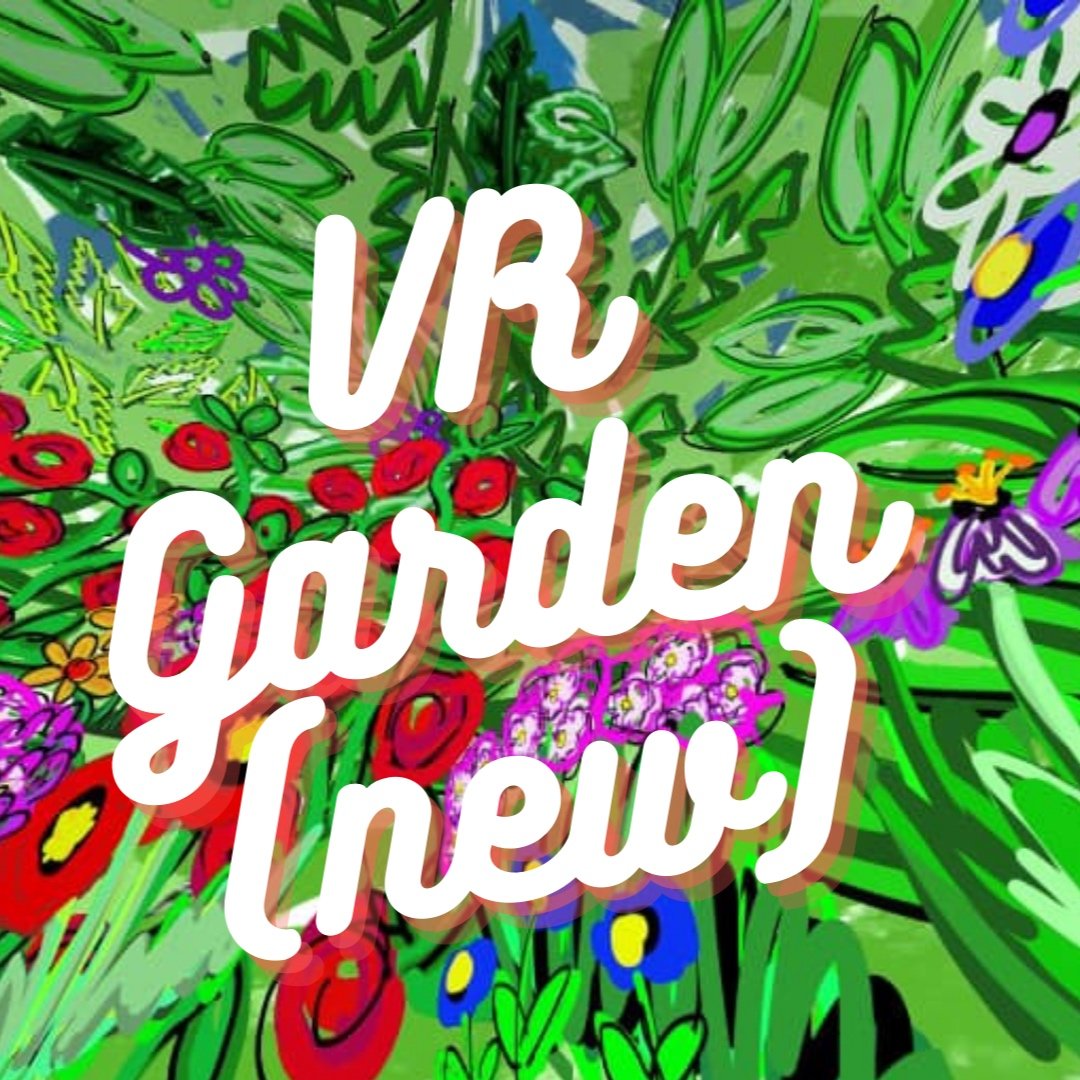
VR Garden (New)
VR Garden (New)
Buzz, Buzz, Buzz. Collect pollen and make some honey. Become a bee and fly up to the beehive in this super-sweet world.

VR Garden: Plant Seeds Together
VR Garden: Plant Seeds Together
Created in partnership with Virtual World Society for Augmented World Expo (AWE), 2024. Plant and count seeds, play quests, get points!

Spill 2 Sparkle
Spill 2 Sparkle
Rescue. Clean. Release. Join the rescue mission to save animals impacted by an oil spill and bring coasts back to life.

Helsinki Immersive Sustainability Lab
Helinki Immersive Sustainability Lab
Created for Helsinki Immersive Suitability Lab. Reality Shakers, Virtual World Society, MIT Reality Hackathon, 2024. Portfolio - Virtual World Society

Women in Horizon (New 2024)
Women in Horizon (New 2024)
Women in Horizon’s new custom import world. Introducing Catalyst Commons, Pods, and more!

Black Hole
Black Hole
Hop into a Black Hole. Keep hopping to break reality and immerse yourself in a multidimensional metaverse world.

Media Lab Future
Media Lab Future
Visit Media Lab Future, where everyday is an intergalactic hackathon. Hack the Hack, MIT Reality Hackathon, 2022.

Women in Horizon (2021-2024)
Women in Horizon (2021-2024)
Visit the original community empowerment group in Meta Horizon Worlds, founded 2021. Inclusive, Diverse, and Progressive!
2024 Worlds included in "Using Your Cosmic Voice of Activation: Socially Responsible Storytelling and XR for Interdimensional Rebirth" with Akilah Martinez and Krystal Curley, MIT Reality Hackathon, 2025